


A handwritten letter is the rarest thing you can send someone in 2026. The average person hasn't received one in years, and the last one they did receive is probably still in a drawer somewhere. That rarity is exactly why handwritten letters land differently than any email, text, or card — and why the pen you use to write them matters more than most senders realize.
This guide covers the mechanics of writing letters people keep — paper choice, pen selection, opening and closing lines, envelope details — with the Wordsworth & Black line as the reference setup. Whether you're writing a condolence note, a thank-you letter, or a long overdue personal update, the setup below produces letters that outlast the envelopes they arrive in.
Key Takeaways
- A handwritten letter takes 15–25 minutes to write well. That time investment is exactly the signal — the recipient feels it before reading a word.
- The Erudite Collection paired with Mysterious Black bottled ink is our top letter-writing setup — the metal body gives the pen presence, the deep black ink photographs and archives well.
- Use cream or ivory 100 GSM writing paper, not journal stock. Letters read differently than journals — the paper should feel formal enough to fold and send.
- Never draft a letter on scrap paper first. The pauses and second thoughts are part of what makes handwritten writing distinctive; typing then copying strips that character out.
- A short handwritten note (3–5 sentences) delivered with intention beats a long typed letter. Length isn't the value — deliberation is.
Why Handwritten Letters Still Matter
Handwritten letters carry three things digital messages can't:
Physical Presence
A letter is a small object that exists in the recipient's hand. It has weight, texture, an unopened corner. That physicality is what makes people keep letters — folded into books, tucked into drawers, saved for decades. Emails are read once and archived; letters occupy space in a life.
Deliberate Pace
You can't hurry a handwritten letter without it showing. Every sentence is chosen because you can't easily edit it. That constraint produces different — often better — writing than an editable digital draft. The reader feels the deliberation even before consciously noticing it.
Personal Signature
Your handwriting is unique. A recipient recognizes it before they read a word. That recognition creates emotional context no font can replicate.
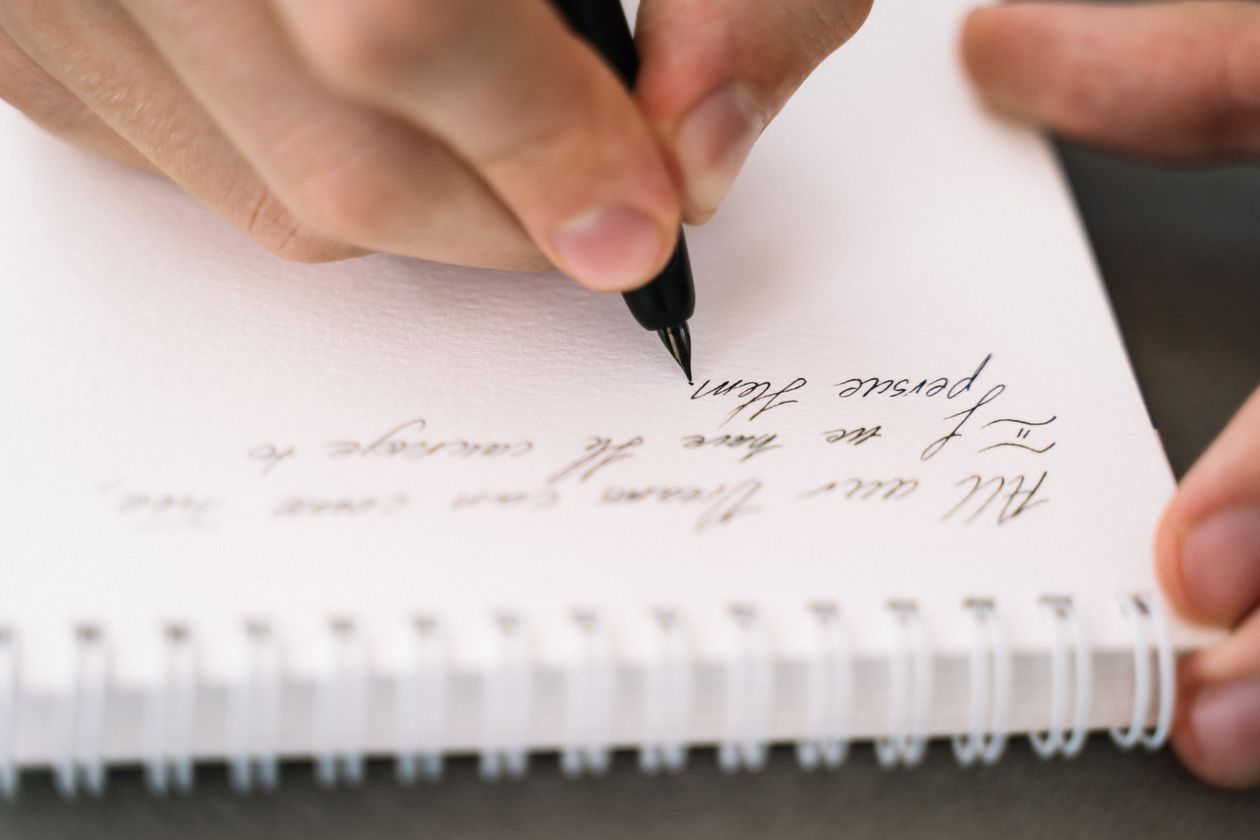
The Letter-Writing Setup
Get the setup right once and every future letter benefits from the same infrastructure.
The Pen: Erudite Collection
The Erudite Collection is the ideal letter-writing pen. The metal body gives the pen the weight and presence that matches the occasion of writing a real letter — the pen feels serious in the hand, which shapes the way you write. Steel-iridium Medium nib produces a consistent, professional line suitable for letters to family, colleagues, or clients equally.
For occasional milestone letters — condolence notes, congratulations for major life events — the Majesti Gold's 18K gilded nib adds subtle line variation that makes the letter feel exceptional.
The Ink: Mysterious Black or Warm Secondary
For formal letters, Mysterious Black bottled ink is the standard. Dark, authoritative, photocopies and scans cleanly if the letter needs to be preserved digitally.
For personal letters — friends, family, condolence notes — consider a warmer color from the Wordsworth & Black bottled ink line. Warmer colors pair beautifully with cream-tinted letter paper and add intimacy to the writing that black ink can't.
The Paper: 100 GSM Cream or Ivory Writing Sheet
Journal paper and letter paper serve different roles. Journal paper is for daily writing; letter paper is for correspondence that gets folded, sent, and read once by someone else. Look for:
- 100 GSM weight — heavy enough to feel substantial, light enough to fold without bulk
- Cream or ivory tint — easier on the reader's eye than bright white, feels more personal
- Smooth surface — allows the fountain pen to glide, especially important for long letters
- Watermark or subtle texture — signals quality without shouting
The Envelope
Match the paper. A quality envelope in the same cream or ivory as the paper, addressed by hand (not printed), with a real postage stamp (not a label) completes the impression. The envelope is often the first thing the recipient sees — it deserves as much care as the letter inside.
What to Write: The Five-Element Letter Structure
Great letters share a rough structure. Not a template — a rhythm.
Element 1: The Opening Line (One Sentence)
Skip generic openings ("I hope this letter finds you well"). Start with something specific — a recent memory, a small observation, a reason for writing right now:
- "I was reading the book you recommended last summer and found myself thinking about our conversation on the boat."
- "The rain here in October is exactly the kind you always said reminded you of home."
- "I've been meaning to write for three months, and this morning I finally had the coffee ready and the pen in hand at the same time."
The opening line signals: this letter is for you specifically, not a form message.
Element 2: The Middle (3–5 Paragraphs)
The body of the letter. What you're actually writing about. Keep paragraphs short (3–5 sentences each) and let each one make one clear point. Handwritten letters read differently than emails — visual paragraph breaks matter more because the reader can't skim.
Content depends on the letter type:
- Personal update: What's changed since you last spoke. Choose 2–3 real things, not a life summary.
- Thank-you note: The specific thing they did, the specific impact it had. Skip generalities.
- Condolence letter: A specific memory of the person who died. Don't try to comfort — just remember with them.
- Milestone note: What you actually see them accomplishing, in the language you'd use in person.
Element 3: The Small Detail (One Sentence Somewhere)
Somewhere in the middle, include one small physical detail that grounds the letter in a specific moment: "I'm writing this at the kitchen table with the window open." That one line does more for warmth than a paragraph of adjectives.
Element 4: The Turn (Toward the Closing)
One sentence that turns from what you wanted to say back toward the recipient: "I'm sending this because you're still, after all these years, one of the people I think about first when something like this happens."
Element 5: The Closing (Two Lines Maximum)
Short and direct. Skip "sincerely" if you can — most letters read better with something more specific:
- "With love,"
- "Yours in memory,"
- "Always,"
- "With admiration,"
Then your name — first name only for anyone close, full name for professional context.
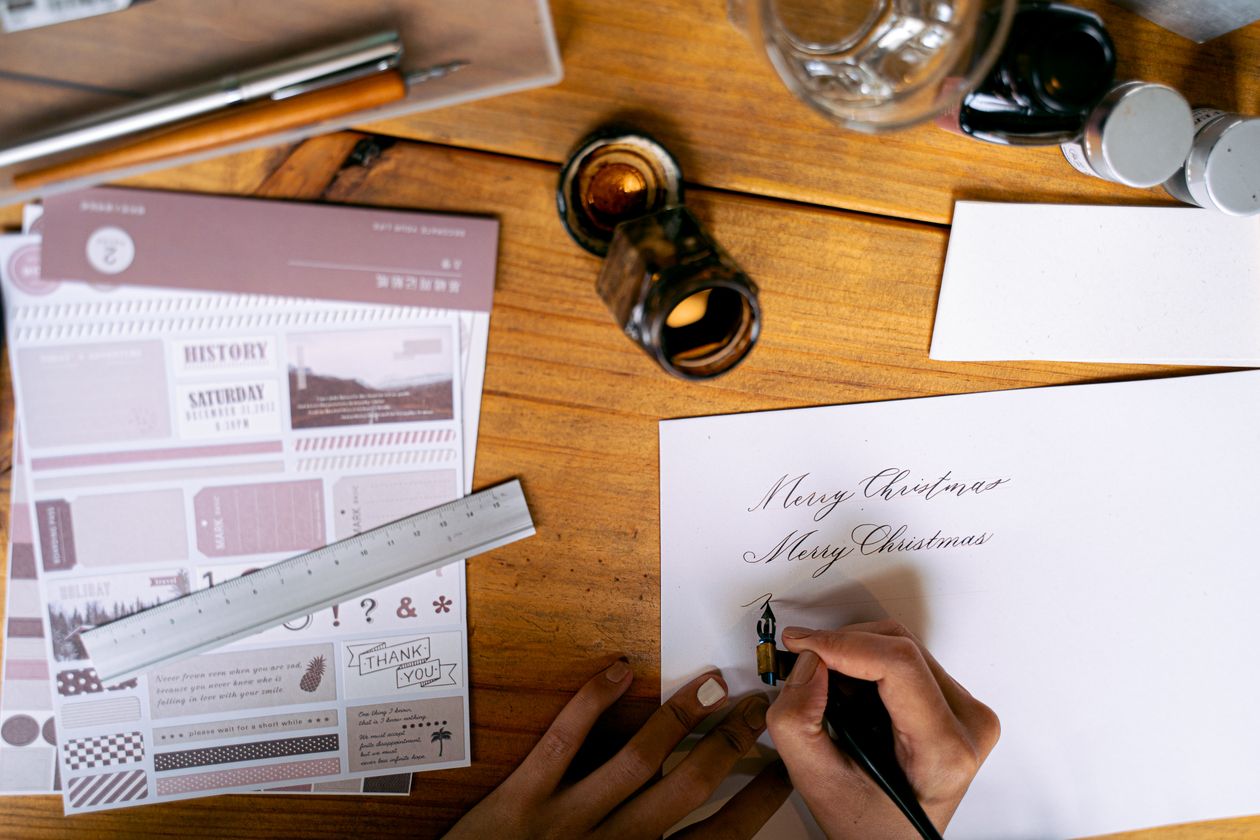
The Practical Mechanics
Don't Draft in Pencil First
The temptation is to plan the letter, write it in pencil, then trace over with the fountain pen. Don't. The corrections and pauses in an original letter are what give it character. A letter that arrives too polished feels typed, even in handwriting.
Do One Draft on Scrap for Long Letters Only
If you're writing a genuinely long letter (2+ pages) about something emotionally difficult, one draft on scrap paper is defensible. Just don't perfect it — you're aiming for a plan, not a manuscript.
Sit Down for 20 Minutes, Not 5
Handwritten letters take longer than expected. Budget 20–25 minutes for a full one-page letter. Rushed letters feel rushed even if the words are good.
Write in One Sitting
Coming back to a letter tomorrow rarely improves it. The pen ink dries slightly differently at different sessions, the tone shifts, and the letter reads like two letters spliced together. Write in one session; if you need to interrupt, put the pen down and finish tomorrow but restart the letter fresh.
Sign the Envelope, Too
Address the envelope by hand — including the return address. If the recipient's card gets separated from the envelope, your handwriting on both means the connection isn't lost.
Letter Templates by Occasion
The Thank-You Note
Length: 4–6 sentences
Structure: Specific thing they did → specific impact → forward-looking sentence → close
Sample opening: "The chapter you sent last week — I've read it three times."
Send within two weeks of the event. Later than that and it starts to feel obligatory.
The Condolence Letter
Length: 5–10 sentences
Structure: Acknowledge the loss briefly → specific memory of the person → what they meant → close with continued presence, not "if you need anything"
Don't try to comfort or explain. Just remember with them.
The Personal Update Letter
Length: One full page (~250–400 words)
Structure: Opening detail → 2–3 real things that changed → one small physical detail → turn toward them → close
Skip the annual holiday card summary. Choose 2–3 things and go deep.
The Milestone Letter
Length: 6–12 sentences
Structure: Recognize what they accomplished specifically → what you saw in the process → what it means going forward → close
Best paired with the Majesti Gold for occasions that deserve a distinct pen.
The Long-Overdue Letter
Length: One page minimum
Structure: Acknowledge the gap → what's actually been happening → what made you write now → forward-looking close
Skip apologies for the delay. The letter itself is the apology.
Common Letter-Writing Mistakes
Writing "I Hope This Letter Finds You Well"
Instant signal that no thought went into the opening. Skip. Start with something specific.
Making It About Yourself
Even a personal update letter should end pointing back at the recipient. If the whole letter is your news with no acknowledgment of them, it reads as a self-report, not correspondence.
Apologizing for Not Writing Sooner
Everyone's busy. The apology takes up space that could be the actual letter. Just write.
Writing on Whatever Paper Is Available
Legal pad paper, printer paper, or notebook pages signal that the letter was an afterthought. Even for casual letters, use dedicated writing paper. The paper is 30% of the impression.
Using the Wrong Pen
Ballpoint on a personal letter reads as "I grabbed the nearest pen." Fountain pen ink signals deliberation. For anything worth writing, use a real pen.
Skipping the Envelope
A great letter in a plain white bulk envelope loses half its impact. Match the envelope to the paper.
The Complete Letter-Writing Setup
| Item | Purpose | Where to Get |
|---|---|---|
| Erudite Collection | Formal letters, professional correspondence | Shop Erudite |
| Crest Set (Medium nib) | Personal letters, casual correspondence | Shop Crest |
| Majesti Gold | Milestone letters (occasional use) | Shop Majesti Gold |
| Mysterious Black bottled ink | Formal correspondence | Shop Bottled Inks |
| Racing Green or warm color | Personal letters | Shop Bottled Inks |
| Cream / ivory writing paper | Letter foundation (source separately) | — |
| Spare cartridges | Travel letter writing | Shop Cartridges |
| Complete kit | Pen + ink + accessories | Writers Bundle |
Frequently Asked Questions
How long should a handwritten letter be?
Long enough to feel considered, short enough that you can write it in one sitting. For most letters, one page (250–400 words) is the sweet spot. Thank-you notes and condolence letters are shorter (4–10 sentences). Personal updates can extend to two pages if there's real news to share.
Do I need to write in perfect handwriting?
No. Legible handwriting is enough. Your natural handwriting — imperfect but yours — is part of what makes the letter personal. Perfectionism kills more letters than any other cause.
Can I use lined paper for letters?
You can. Unlined is more traditional and looks more formal. If your handwriting drifts on unlined paper, use lightly-lined or dot-grid paper to keep your lines straight without visible ruling.
What if I make a mistake mid-letter?
Small mistakes (one letter, minor smudge) — leave them. They're part of the letter's character. Large mistakes (wrong word that changes meaning) — start over. The paper isn't precious enough to preserve at the cost of the letter's clarity.
Is fountain pen ink archival?
Standard dye-based inks from the Wordsworth & Black bottled ink line are lightfast enough for typical storage but not truly archival. For letters intended to last generations (family history documents, legal correspondence), consider using an iron-gall or pigment ink — different products, less beginner-friendly.
Can I write letters in a foreign language with fountain pen?
Yes — fountain pens work in any script. Non-Latin scripts (Chinese, Arabic, Cyrillic) may benefit from specific nib sizes: Extra Fine for character precision, Broad for calligraphic emphasis. The Crest Set's five interchangeable nibs let you experiment across scripts from a single pen.
How often should I write letters?
Aim for one letter per month. That's frequent enough to build the habit and infrequent enough that each letter gets the attention it deserves. Weekly letter-writing is admirable but not necessary; the annual holiday card summary isn't a letter — it's a broadcast.
Final Verdict
A handwritten letter is one of the few things you can send someone in 2026 that they'll still have in 20 years. The pen matters — it's part of the ritual and part of the impression. Match the pen to the letter's purpose:
- Formal correspondence: Erudite + Mysterious Black
- Personal letters: Crest Set + warm-color or Racing Green
- Milestone letters (rare use): Majesti Gold + Mysterious Black
Then pair with 100 GSM cream writing paper and matching envelope. Total setup cost for a full letter-writing kit built on the Wordsworth & Black line: about $50–$90 including one pen, one ink, and cartridge backup.
The letter itself takes 20–25 minutes to write well. The recipient will read it in 60 seconds and keep it for the next 20 years. That ratio — 25 minutes of your time for two decades of someone else's memory — is the reason handwritten letters still matter.