


The nib is the single most important part of a fountain pen. Everything else — the barrel, the fill system, the ink — supports what happens where that piece of tipped metal touches the paper. Choose the right nib and every fountain pen decision that follows makes sense. Choose the wrong one and the best pen in the world writes like an argument.
This is the complete guide to fountain pen nibs — sizes (Extra Fine through Stub), materials (steel-iridium vs 18K gilded), how they behave under real writing conditions, and how to choose the one that matches your handwriting. Everything below is tested on the Wordsworth & Black line, with data from our 30-day comparison across all five nib sizes in the Crest Set.
Key Takeaways
- Fountain pen nibs come in five common sizes: Extra Fine (EF), Fine (F), Medium (M), Broad (B), and Stub — each producing a different line width and writing feel
- Medium (M) is the safest universal default for a first fountain pen; the Crest Set ships with all five nibs so you can try them without buying multiple pens
- Steel-iridium nibs (Crest, Erudite) are more durable; 18K gilded nibs (Majesti Gold) offer subtle flex and line variation — different tools, different jobs
- In our 30-day test, dry time varies by ~2× across the range: EF ~5s, F ~7s, M ~11s, B ~13s, Stub ~12s on 120 GSM paper with Royal Blue ink
- A damaged nib takes 30 seconds to swap with a spare nib — a pen never becomes "dead" as long as replacement nibs exist
The Anatomy of a Fountain Pen Nib
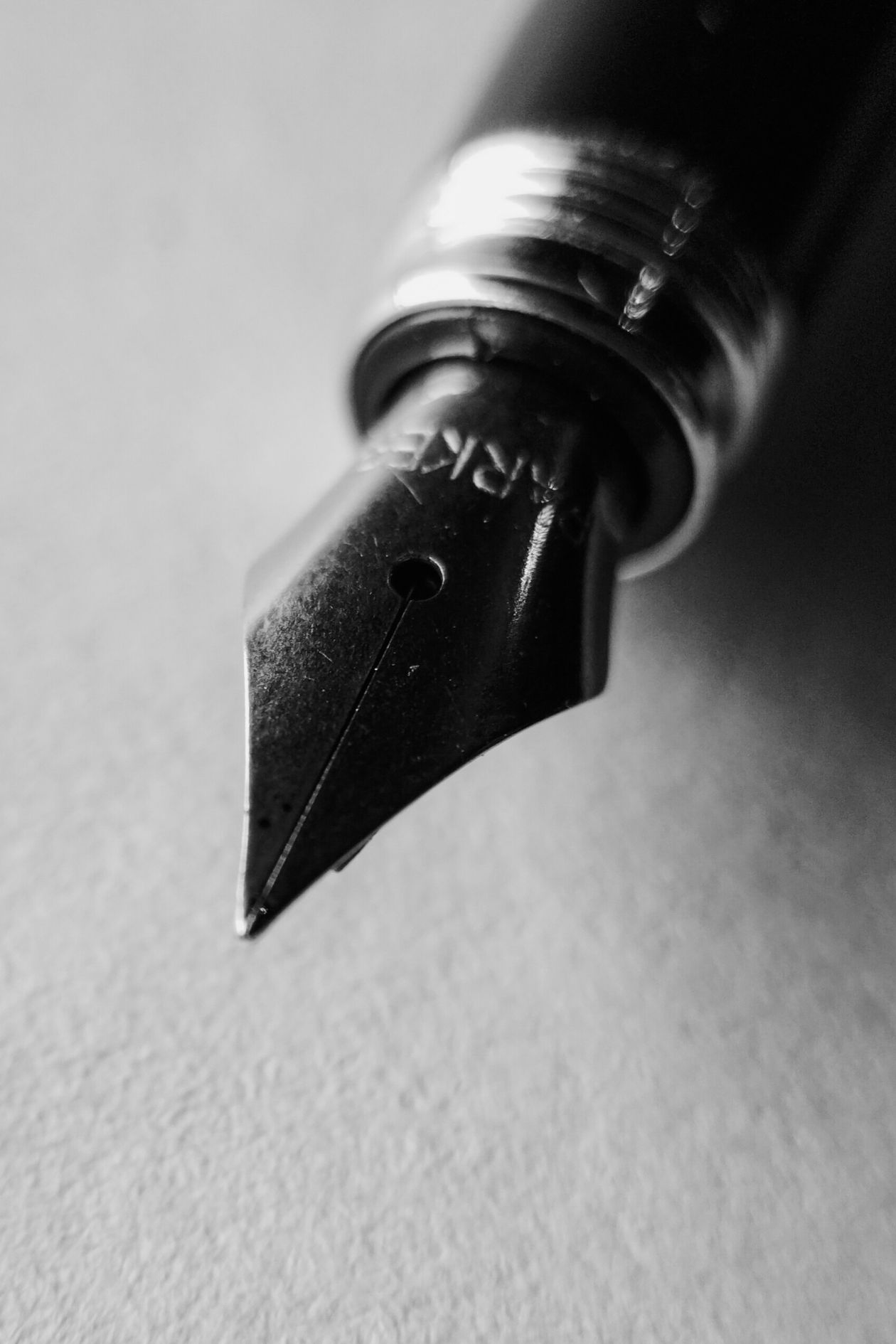
Every fountain pen nib — no matter the size or brand — shares the same core parts. Understanding them makes every downstream decision easier.
The Tipping
The tiny ball of hard metal at the very tip of the nib. On steel nibs, it's usually iridium or a similar alloy. On premium gold nibs, it's still iridium — gold is too soft to survive paper contact. The tipping is what physically touches the paper; the size and shape of this tiny piece determines line width.
The Slit
A precisely-cut line running from the tipping up toward the breather hole. Capillary action pulls ink through this slit down to the paper. If the slit is too tight, the pen skips. If too wide, ink floods.
The Tines
The two halves of the nib on either side of the slit. In flex nibs (like the 18K gilded nib on the Majesti Gold), the tines separate slightly under pressure, widening the line. In firm steel nibs (like the Crest and Erudite), the tines barely move — the line stays consistent.
The Breather Hole
The small circular hole at the top of the slit. Balances air pressure inside the feed and prevents ink from flooding when the pen is capped.
The Shoulders
The wider curved sections above the tines. Give the nib its shape and structural rigidity.
The Feed
Not part of the nib itself, but sits directly below it. A fluted plastic or ebonite piece that delivers ink from the cartridge/converter up to the nib slit via capillary action. In modern fountain pens the nib and feed are matched pairs — swapping one usually means swapping both.
The Five Common Nib Sizes
Fountain pen manufacturers use standard nib size designations. Actual line width varies slightly by brand, but the categories are universal.
Extra Fine (EF)
Line width: ~0.3 mm | Feel: Precise, minimal ink
The narrowest nib in common use. Excellent for small handwriting, dense note-taking, and detailed work like architectural notes or shorthand. Least ink per stroke means fastest drying — the EF is the go-to nib for left-handed writers and anyone who writes fast enough that their hand catches fresh ink.
Trade-offs: Shows technique flaws (uneven pressure, tilted grip) more visibly than wider nibs. Feels slightly less "smooth" — that's not a defect; it's the direct feedback of a precision-tuned tip on paper fibers.
Best for: Small handwriting, dense notes, fast writers, left-handed grip, detailed work.
Fine (F)
Line width: ~0.4–0.5 mm | Feel: Smooth, controlled
The everyday workhorse. Smoother than EF, less ink-heavy than Medium. Excellent for daily writing, journaling on standard paper, and any context where you'll re-read your own handwriting.
Trade-offs: Lacks the character of a Stub or the boldness of a Broad. Neutral choice — reliable but rarely inspiring.
Best for: Daily journaling, students, professionals who want consistent legibility, anyone unsure between EF and M.
Medium (M)
Line width: ~0.6–0.7 mm | Feel: Smooth, generous flow
The universal default. Flows easily, forgives technique issues, and produces a bold-but-readable line. When you don't know which nib to buy — or when you're buying a fountain pen as a gift for someone whose handwriting you don't know — Medium is the safe answer.
Trade-offs: Lays down enough ink that cheap paper (70–80 GSM) can feather. Dry time creeps toward 11 seconds on quality paper — noticeable but not disruptive.
Best for: First fountain pens, gifts, general daily use, most right-handed writers.
Broad (B)
Line width: ~0.8–0.9 mm | Feel: Wet, expressive, bold
A statement nib. Lays down significant ink volume, producing a bold, wet, dark line. Signatures written with a Broad look intentional in a way Medium can't match. Journaling with a Broad on quality paper feels more like painting than writing.
Trade-offs: Requires quality paper (100+ GSM) to avoid feathering. Dry time longest of the common sizes — noticeably slow for left-handed writers. Uses ink faster than smaller nibs.
Best for: Signatures, journaling, letters, occasional formal writing, anyone whose handwriting is naturally large.
Stub
Line width: ~1.0–1.1 mm horizontal, ~0.3 mm vertical | Feel: Line variation, calligraphic
The wildcard. Instead of a rounded tip, the Stub is flat — producing a thick line on downstrokes and thin on cross-strokes. Turns ordinary handwriting into something distinctive. Common signature nib for people who want their name to look considered.
Trade-offs: Requires a slight technique adjustment — you have to keep the nib at a consistent angle to maintain the line variation. Feels awkward for the first 20–30 minutes of use, then clicks.
Best for: Journaling, letters, distinctive signatures, calligraphic hobbyists.
Nib Materials: Steel-Iridium vs 18K Gilded
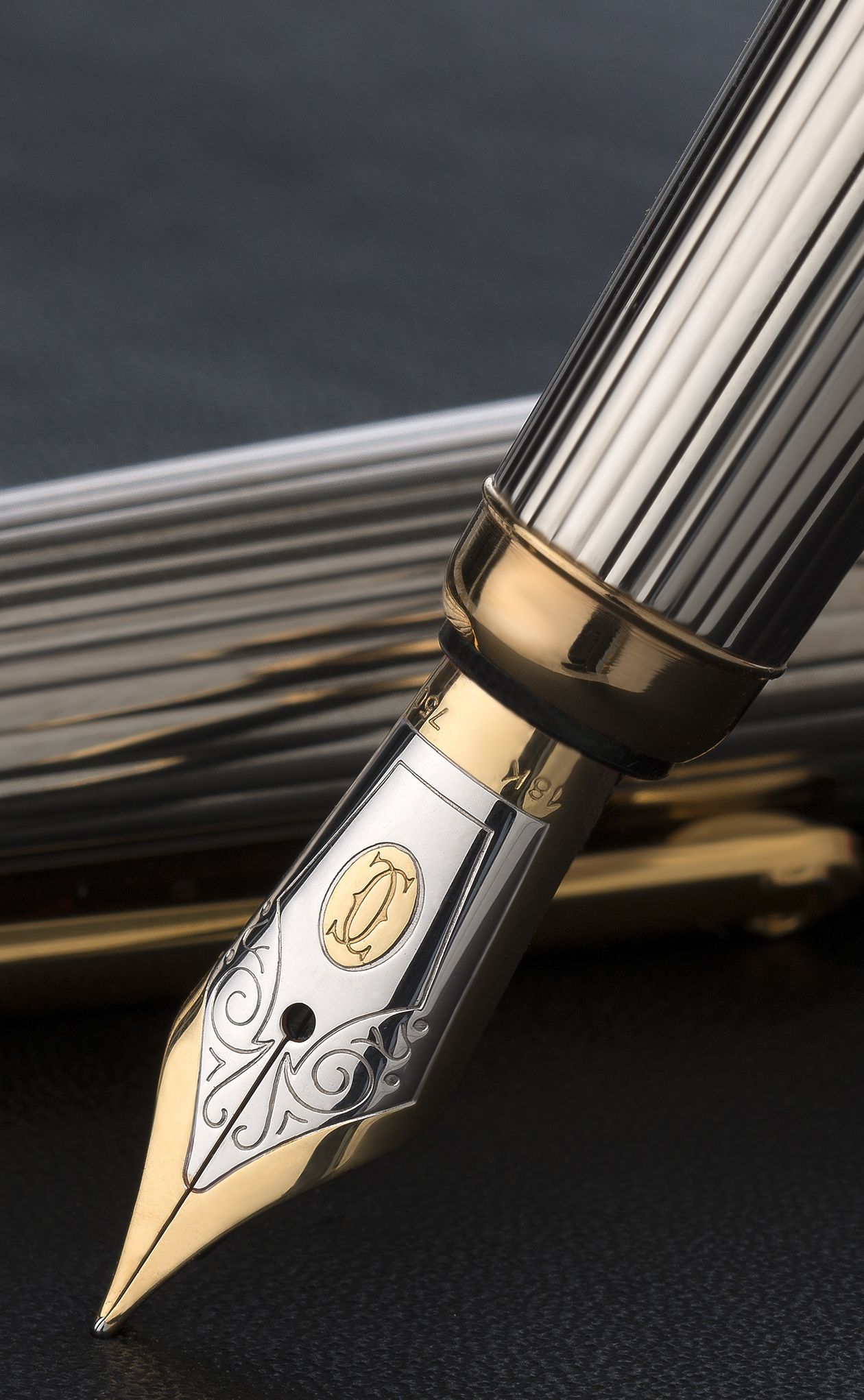
Beyond size, nibs differ in material. The Wordsworth & Black line uses two: German steel with iridium tipping (Crest, Erudite) and 18K gilded (Majesti Gold). Same job, different behavior.
Steel-Iridium (Crest and Erudite)
Precision-ground German steel body with an iridium ball at the tip. Firm — the tines barely flex under normal pressure. Produces a consistent, uniform line regardless of how hard you press. Extremely durable; a well-maintained steel nib lasts decades of daily use.
The Crest Set and the Erudite Collection both use this nib type. The Crest ships with five interchangeable steel nibs (EF, F, M, B, Stub); the Erudite comes with a choice of F, M, or B.
18K Gilded (Majesti Gold)
An 18K gold overlay on a steel core, with iridium tipping. The gold provides subtle flex — the tines separate slightly when you press harder on downstrokes, widening the line. That flex creates the "expressive" writing feel gold-nibbed fountain pens are known for.
The Majesti Gold uses an 18K gilded medium nib specifically. The subtle flex is what makes signatures written with a Majesti look distinct from signatures written with a standard steel nib.
Which Should You Choose?
| You Want | Choose |
|---|---|
| Daily consistency, low maintenance | Steel-iridium (Crest / Erudite) |
| Line variation, expressive signatures | 18K gilded (Majesti Gold) |
| Multiple sizes to experiment | Steel-iridium (Crest ships with 5) |
| Milestone gift, statement pen | 18K gilded (Majesti Gold) |
| First fountain pen | Steel-iridium (Crest — safer default) |
| Second fountain pen upgrade | 18K gilded (Majesti Gold) |
Most fountain pen owners end up with both types across their collection. Steel-iridium for daily writing, 18K gilded for the desk pen used for signatures and important letters.
How to Choose Your Nib Size — Decision Guide
The right nib matches your handwriting, your paper, and how you write.
Match to Handwriting Size
- Small, tight handwriting (fits many words per line): choose EF or F
- Medium handwriting (standard notebook ruling): choose M
- Large, loopy handwriting (fewer words per line): choose M or B
- Writes to be read from distance (whiteboard-style): choose B or Stub
Match to Paper Quality
- Cheap office paper (70–80 GSM): EF or F to minimize feathering
- Standard journal (90–100 GSM): F, M, or Stub
- Premium journal (120+ GSM): Any nib works — M or B shines here
Match to Writing Speed
- Fast (note-taking, lectures): EF or F — faster dry time keeps up
- Moderate (journaling, letters): F or M
- Slow (reflective writing): M, B, or Stub — enjoy the wet, deliberate line
Match to Writing Hand
- Right-handed: Any nib works. Default to M for a first pen.
- Left-handed: EF or F to minimize smudging. See our Royal Blue bottled ink for the fastest-drying pairing.
Our take: Most fountain pen owners buy a Medium first, then buy a Fine second when they realize their handwriting is smaller than they thought, then buy a Stub third when they want signatures to look distinct. The Crest Set collapses that three-year buying journey into a single purchase — all five nibs ship in the same set.
Our 30-Day Nib Comparison Test
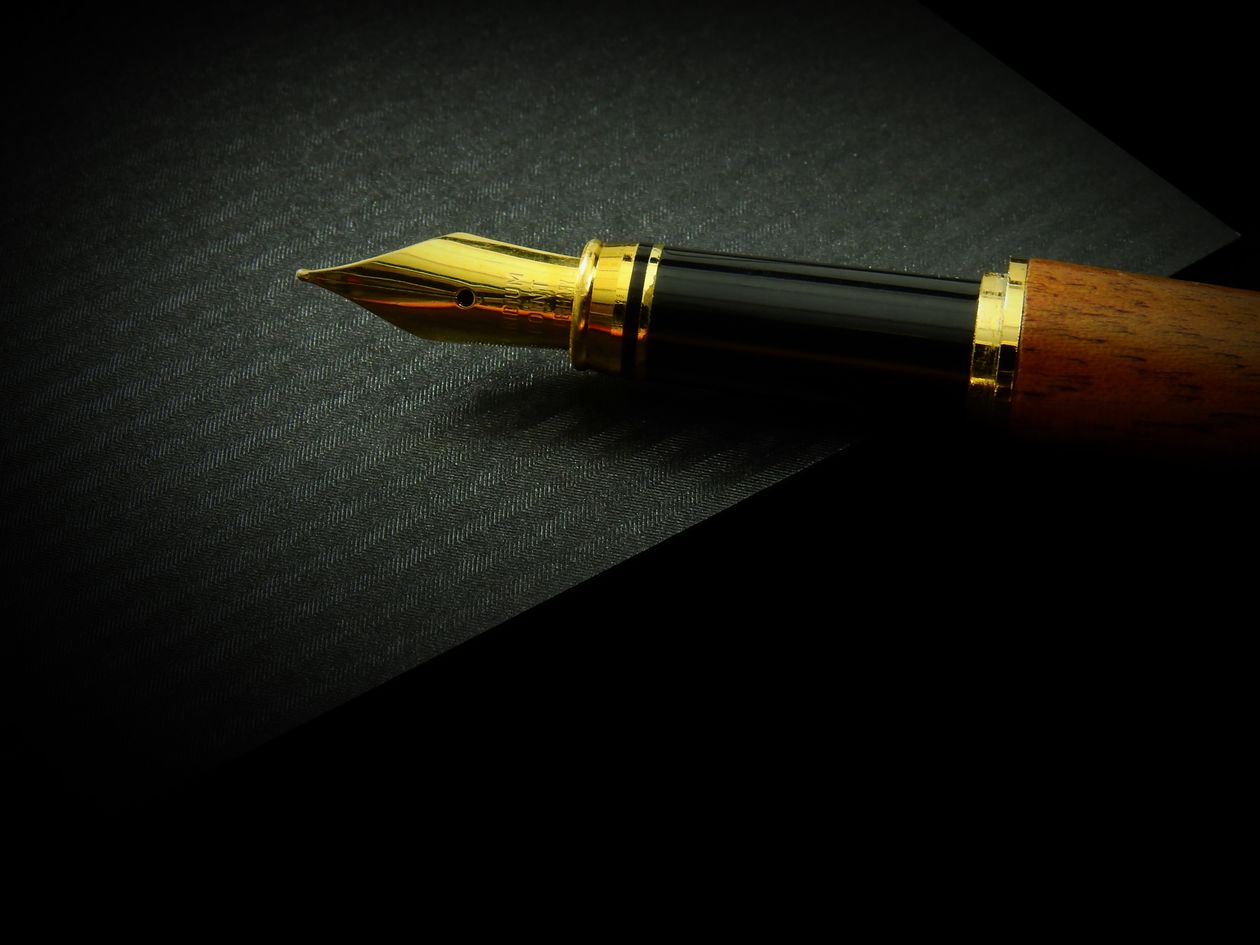
We ran all five Crest nibs across a 30-day comparison — same writer, same 120 GSM journal paper, same Royal Blue bottled ink, same 250-word daily entries.
| Nib | Line Width | Dry Time | Ink Volume | Feel |
|---|---|---|---|---|
| EF | 0.3 mm | ~5 s | Minimal | Precise, slight feedback |
| F | 0.5 mm | ~7 s | Low | Smooth, controlled |
| M | 0.7 mm | ~11 s | Moderate | Silky, generous flow |
| B | 0.9 mm | ~13 s | High | Wet, bold, expressive |
| Stub | 1.1 × 0.3 mm | ~12 s | High | Line variation, calligraphic |
Observations from the test:
- The EF-to-M jump is the biggest step in feel — from "precise" to "smooth" happens between F and M.
- Broad and Stub use ~2× the ink of Extra Fine. Plan on refilling from your bottled ink or cartridges more often if you use those sizes daily.
- Dry time on cheap 80 GSM office paper dropped by 30–40% across all nibs (faster drying, but visible feathering with M and above).
- The Stub required 3–4 days of practice to feel natural — the shortest learning curve of any nib in the set, but not zero.
Common Nib Problems and How to Fix Them
The Nib Feels Scratchy
Almost always a technique issue, not a nib defect. Try:
- Rotate the pen 45 degrees in your hand — find a slightly different grip angle
- Check paper quality — feathering on cheap paper can feel like scratchiness
- Confirm the nib slit is aligned (nib tines should meet evenly at the tipping)
If scratchiness persists after these fixes, the nib may have been damaged in shipping or use. Swap it with a spare nib — 30 seconds, no tools.
The Nib Skips
Usually a flow issue, not a nib issue. Try:
- Tap the pen nib-down to release any air bubble in the cartridge/converter
- Flush the nib and feed with cold tap water (30–60 seconds)
- Refill with fresh ink
The Line Is Uneven (Thick-Thin Randomly)
The nib tines may have separated slightly (usually from a bag drop or aggressive pressure). If it's a steel-iridium nib, gently press the tines back together with your fingertips (both sides simultaneously, very light pressure). If it's the 18K gilded nib, don't attempt this at home — the flex is precision-tuned and you'll damage it. Send it to service or swap with a spare.
The Nib Is Bent
Rare but real — typically from a fall. If a nib is visibly bent, don't write with it (it can damage the feed). Swap with a spare nib and discard the bent one.
Nib Care: Making It Last Decades
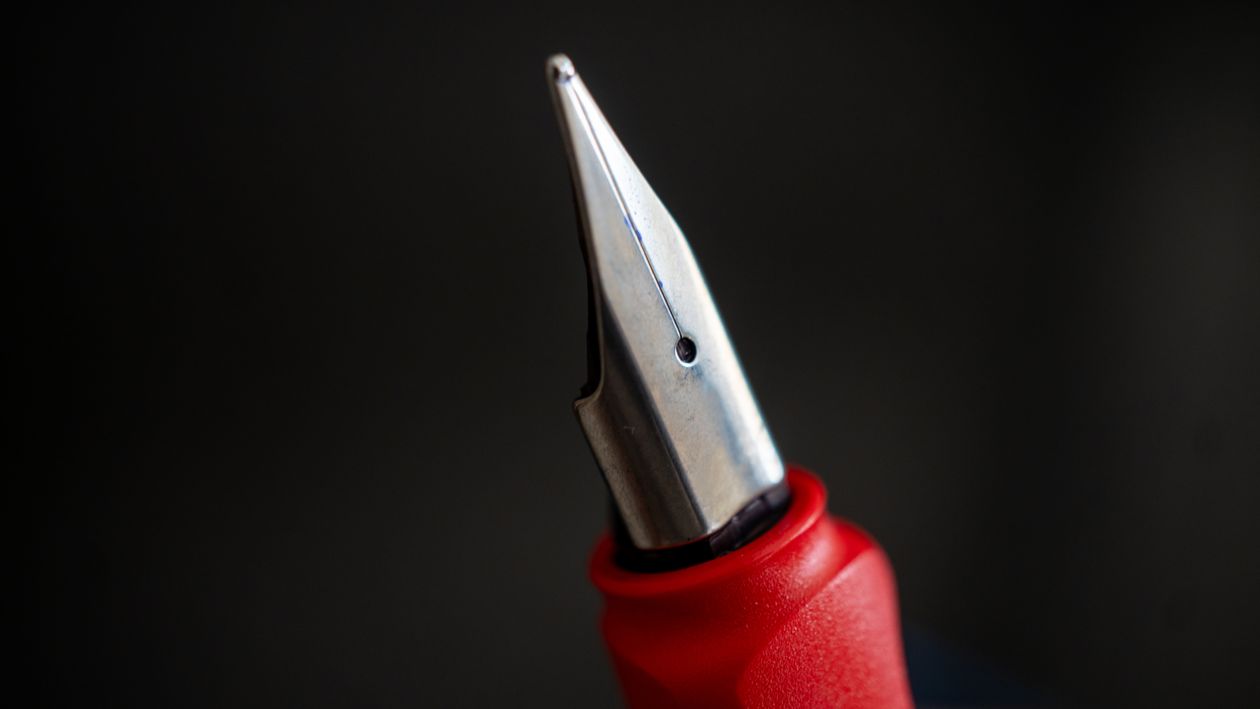
A well-maintained steel-iridium nib lasts effectively forever. Care habits:
Never Wipe the Slit Directly
The nib slit is precision-tuned. Wiping it — even gently — can misalign the tines. Let it air-dry after flushing. If you must remove excess ink, blot the outer surface of the nib with a soft cloth, not the slit itself.
Flush Every 4–8 Weeks
Standard maintenance for any fountain pen. Removes dried ink from the feed before it clogs the nib slit. Full routine in our care guides — 10 minutes plus overnight drying.
Store the Pen Nib-Up
When capping the pen for storage (even overnight), keep it nib-up. Prevents ink from settling into the tipping and prevents leaks during temperature changes.
Don't Let Others Borrow It
Every writer's hand angle and pressure gradually re-tunes the nib to their specific writing style. When someone else writes with your pen, their angle temporarily throws off yours. Loan a ballpoint instead.
Carry a Spare Nib
Every Wordsworth & Black spare nib swaps in under 30 seconds — no tools needed. Keeping one in your pen case means a bag drop or accidental damage doesn't take your pen out of service.
Building a Complete Nib Setup
For fountain pen owners who want the full range of expressive writing:
| Setup Level | Configuration | Cost |
|---|---|---|
| Starter | Crest Set (5 nibs, cartridge + converter, wooden case) | $39.99 |
| Daily driver | Crest Set + Royal Blue bottled ink + spare Fine nib | ~$60 |
| Enthusiast | Crest Set + Erudite Collection (second pen, different nib) | ~$90 |
| Milestone | Add Majesti Gold with 18K gilded nib for signatures | +$60 |
| Complete kit | Writers Bundle (pen + ink + accessories) | Varies |
Starting with the Crest Set is the strongest first step in the entire line — five nib sizes for the price most brands charge for one. Every subsequent purchase (Erudite, Majesti Gold, spare nibs) builds on that starting knowledge of which nib size fits your writing.
Frequently Asked Questions
Which nib size should a first fountain pen buyer choose?
Medium (M) is the safest universal default. It flows smoothly, forgives technique, and produces a readable line on any paper. Or — better — buy the Crest Set, which ships with all five nib sizes so you can try Medium first, then swap to another if it doesn't fit your handwriting.
Are gold nibs really "better" than steel nibs?
Different, not universally better. Gold nibs (like the 18K gilded nib on the Majesti Gold) offer subtle flex for line variation. Steel-iridium nibs (Crest, Erudite) offer consistent, firm writing. For daily use, steel is more forgiving; for expressive writing, gold is more rewarding. Neither is a defect version of the other.
Can I swap nibs on a Wordsworth & Black pen?
Yes — every fountain pen in our line uses interchangeable nib units. The Crest Set ships with five nibs in one set and includes swap instructions. Additional spare nibs are available for all pen models.
How long does a fountain pen nib last?
With routine flushing and careful use, a steel-iridium nib lasts decades. The iridium tipping is designed to survive millions of feet of paper contact. The most common cause of nib "death" isn't wear — it's dropping the pen and bending the nib, which is why keeping a spare is worth doing.
Do I need special ink for different nib sizes?
No. Every ink in the Wordsworth & Black bottled ink line is tuned for moderate wetness — safe across all nib sizes from EF to Stub. Wider nibs use more ink per stroke, but the ink formulation stays the same.
What's the difference between a Stub and an Italic nib?
Both produce line variation (thick down-strokes, thin cross-strokes). Italic nibs have sharper edges and produce more dramatic variation — but they're harder to write with because they demand precise nib angle. Stub nibs are the beginner-friendly version: less dramatic variation but much more forgiving.
My handwriting is neat and small — should I go EF?
Try Fine (F) first. Small, neat handwriting benefits from F rather than EF because F is smoother and less demanding on technique. Move to EF only if F feels too thick for your notebook ruling.
Can I write calligraphy with a Stub nib?
Casual calligraphy, yes. Formal calligraphy — the kind with dramatic thick-thin transitions — typically requires dedicated calligraphy nibs (Italic or dip-pen nibs). The Stub is the "everyday calligraphic" nib, not the specialist tool.
Final Verdict
The best fountain pen nib is the one that matches your handwriting, your paper, and how you write. There's no universal "best" nib — only the best nib for you.
If you're buying your first fountain pen, the Wordsworth & Black Crest Set at $39.99 is the strongest starting point in the entire line: five interchangeable nibs (EF, F, M, B, Stub), cartridge + converter included, wooden gift case. You'll try Medium first, then swap to your preferred size at home — without buying multiple pens.
If you already know your preferred nib and want a step up, the Erudite Collection offers the same steel-iridium quality in a premium metal body. Or upgrade to the Majesti Gold's 18K gilded nib for the expressive line variation gold nibs are known for.
Whichever pen you choose, keep a spare nib in the case. A pen with a spare nib never becomes "broken" — a 30-second swap keeps you writing.
→ Browse the full Wordsworth & Black Fountain Pen Collection