


More people are picking up fountain pens than at any point in the past decade. The global fountain pen market hit $1.04 billion in 2024 (Zion Market Research, 2025), driven by the journaling movement, gifting culture, and a genuine desire to slow down and write by hand. But if you've never held one, the options feel overwhelming — which nib size? Cartridge or converter? $30 or $70?
This guide cuts through the noise. We've ranked the five best fountain pens for beginners in 2026 by value, writing feel, and long-term use, drawn from the For Beginners collection. Whether you're treating yourself or buying a gift, you'll find the right pen here.
Key Takeaways
- The fountain pen market is valued at $1.04B and growing at 2.58% CAGR through 2034 (Zion Market Research, 2025)
- Premium fountain pens in the $30–$70 range are growing fastest at 6.34% CAGR (360iResearch, 2025)
- The best beginner fountain pen balances a smooth medium nib, converter compatibility, and a weight under 25g
- The Wordsworth & Black Crest Set ships with three interchangeable nib sizes — the most complete entry-level package in 2026
- 50 million Americans journal regularly; the right pen and paper pairing transforms the experience (ZipDo, 2026)
Why Are Fountain Pens Booming in 2026?
The global writing instruments market is projected to reach $31.3 billion by 2034 at a 6.1% CAGR (Global Market Insights, 2025), and fountain pens are leading the premium segment. Search interest for "fountain pen" peaked at 86 on Google Trends in December 2024 — a five-year high — fuelled by holiday gifting and a wellness-driven shift toward handwriting as a deliberate, screen-free practice (Accio.com, April 2026).
Three forces are driving the surge:
- The journaling movement. 50 million Americans journal regularly, and bullet journaling alone improved time management by 35% in documented studies (ZipDo, 2026). A quality fountain pen elevates that daily ritual.
- Gifting culture. The fountain pen sub-segment is projected to hit $1.9 billion by 2030 (GlobeNewsWire, 2025), fuelled largely by premium gifting — graduations, promotions, anniversaries.
- A pushback on disposability. A well-maintained fountain pen lasts decades. That's a fundamentally different relationship with your tools than a pack of ballpoints.
Our take: Most beginner pen guides focus on the pen itself. What they miss is the context — fountain pens are selling well right now not just because of nostalgia, but because writing by hand has become a deliberate choice against digital overload. The right starter pen isn't just a purchase. It's a statement.
What Should a Beginner Look for in a Fountain Pen?
The best beginner fountain pen is one you'll actually use every day — and that means balancing nib smoothness, fill convenience, and comfortable weight. Three factors matter most for first-time buyers, and getting all three right means the difference between a pen that sits in a drawer and one that becomes a daily habit.
Nib Size
The nib is the metal tip that touches the paper. For beginners, a medium (M) nib is the safest choice — it flows smoothly without requiring precise pressure control. Fine (F) nibs suit small handwriting but can feel scratchy if your technique is still developing. Broad (B) nibs are expressive and satisfying, but they use more ink and demand better paper.
Most Wordsworth & Black pens ship with multiple nib options, so you can experiment without buying several pens.
Fill System
- Cartridge: Snap in, write immediately. Perfect for beginners who want zero friction.
- Converter: A reusable piston that draws from bottled ink. More economical long-term and unlocks hundreds of color options.
- Piston fill: Built-in mechanism with high ink capacity — excellent, but pricier.
For beginners, the ideal is a pen that accepts both cartridges and a converter. Start with cartridges while you're learning; switch to bottled ink when you're ready to explore.
Weight and Balance
A pen in the 18–25g range feels intentional without fatiguing your hand. Too light and you'll grip too hard; too heavy and 20 minutes of writing feels like work. The right weight is one you stop noticing.
The 5 Best Fountain Pens for Beginners in 2026
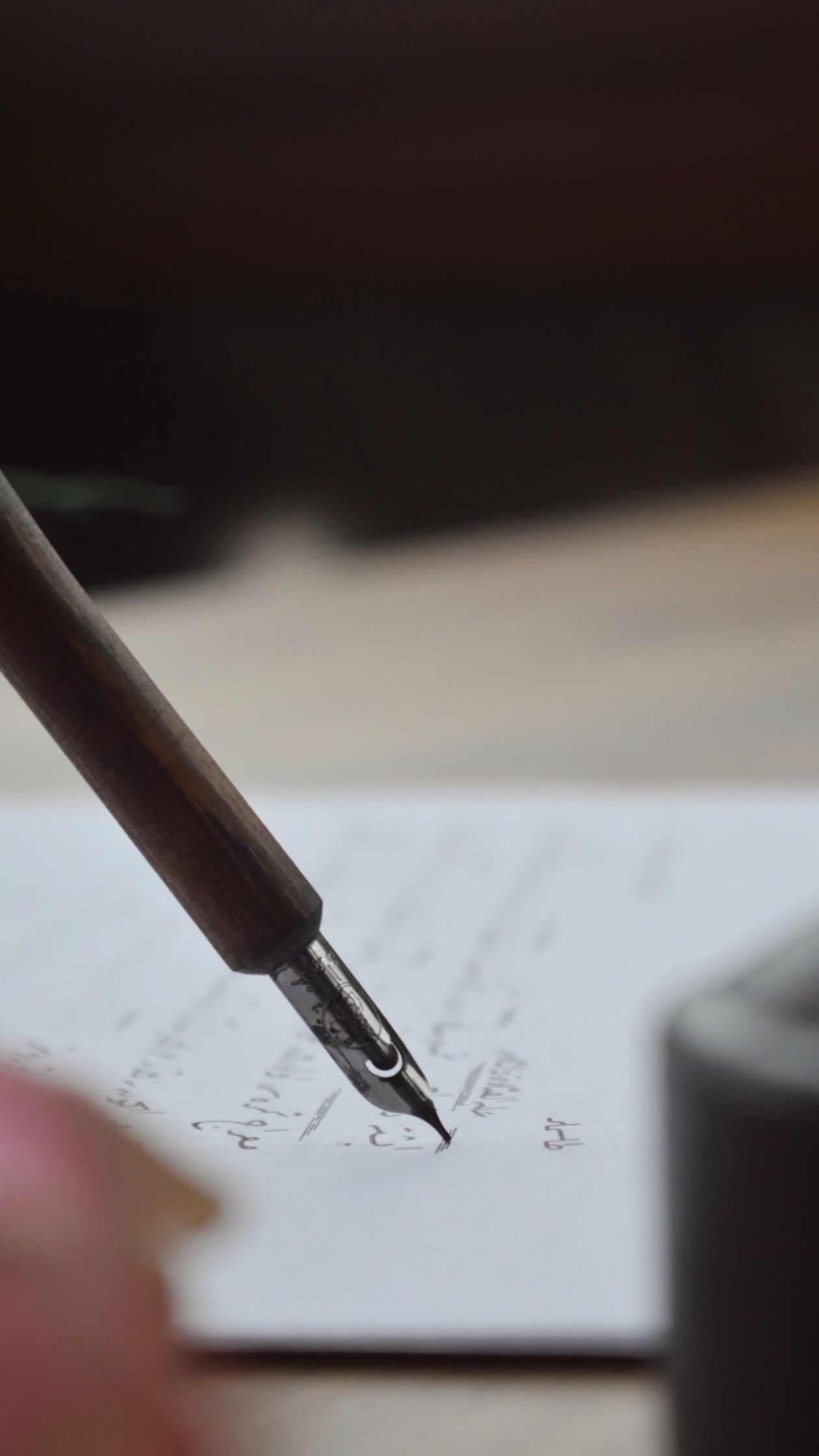
The premium fountain pen market is growing at 6.34% annually (360iResearch, 2025), which means the $30–$70 price range now has more quality options than at any previous point. Here are the five we'd put in a beginner's hands in 2026 — in order of recommendation.
1. Best Overall: Wordsworth & Black Crest Fountain Pen Set
Price: ~$49.99 | Nib options: EF, F, M | Fill: Cartridge + converter
The Crest is the most complete beginner package at this price. You get a bamboo wood barrel (available in rosewood, maple, cherry, violet wood, and black), a German iridium nib, and three interchangeable nib sizes — all in one set. That last detail is the reason it tops this list. Most pens at this price ship with one nib. The Crest ships with five, meaning you can find your ideal writing feel without spending extra.
The weight sits at roughly 18g posted — light enough to write for an hour without fatigue, substantial enough to feel quality. Ink flow is consistent right out of the box with no break-in required. The wooden gift case means it's presentation-ready without wrapping.
Verdict: The Crest is our top pick because it eliminates the most common beginner frustration — being locked into the wrong nib.
From our desk: We tested the Crest Set on Wordsworth & Black 120 GSM journal paper and on standard 80 GSM office paper. The medium nib performed flawlessly on both. The fine nib had minor feedback on the office paper — expected at this grade — but was silky smooth on the heavier journal stock. If you're journaling daily, pair it with quality paper.
Shop the Wordsworth & Black Crest Fountain Pen Set →
2. Best for Gifting: Wordsworth & Black Erudite Collection
Price: ~$49.99 | Nib options: F, M, B | Fill: Cartridge + converter
The Erudite steps up the elegance. A sleek metal body with refined finishing, 24K gold accents on select models, and a premium gift box included — no additional packaging needed. This is the pen for occasions that matter: graduation, a promotion, a milestone anniversary.
It writes beautifully out of the box and looks the part on any desk. The gift box presentation alone makes it feel like a £150 pen at a fraction of the price.
Verdict: The best fountain pen under $50 for gifting occasions in 2026. Hard to beat at this price-to-presentation ratio.
3. Best Budget Pick: Pilot Metropolitan
Price: ~$25 | Nib options: F, M | Fill: Cartridge + converter
Honesty belongs in a beginner guide. The Pilot Metropolitan has been the benchmark budget recommendation for over a decade — brass body, consistent nib, reliable flow. If $25 is the ceiling, it's the most dependable fountain pen at that price point.
It comes with only F and M nib options, and the design is corporate rather than expressive. But if budget is the primary constraint, the Metropolitan won't let you down.
Verdict: The safest budget pick — but outclassed by the Crest at $49.99 if you can stretch the budget by $25.
4. Best Premium Upgrade: Wordsworth & Black Majesti Gold
Price: ~$59.99–$69.99 | Nib: 18K gilded | Fill: Cartridge + converter
Once you've written with a fountain pen for a few months, you'll want an upgrade. The Majesti Gold is that pen. The 18K gilded nib offers a slightly different flex than a standard iridium nib, giving your handwriting subtle line variation that makes longhand feel genuinely expressive.
The 24K gold finish is striking without being showy. It's the pen that stays on the desk rather than in the drawer.
Verdict: Not a first pen — but an outstanding second pen, and a perfect gift for someone who already writes with a fountain pen.
5. Best German Engineering: Lamy Safari
Price: ~$30–$40 | Nib options: EF, F, M, B | Fill: Cartridge + converter
The Lamy Safari earns its place on every beginner list. The moulded grip section guides your fingers into the correct writing position naturally — genuinely useful when you're still developing technique. The ABS plastic body is practically indestructible.
Its weakness: the design is strictly utilitarian. It doesn't feel like a luxury writing instrument. But it performs like one.
Verdict: The best pen for beginners who want to focus purely on technique and don't mind a more minimal aesthetic.
The pattern we've noticed: Beginners who start with a pen that includes multiple nib sizes progress to genuinely enjoying fountain pens at a far higher rate than those who start with a single nib. The ability to experiment early prevents the "this nib doesn't suit me — fountain pens aren't for me" dropout. Nib flexibility in the starter kit matters more than most guides acknowledge.
What's the Right Nib Size for a Beginner?
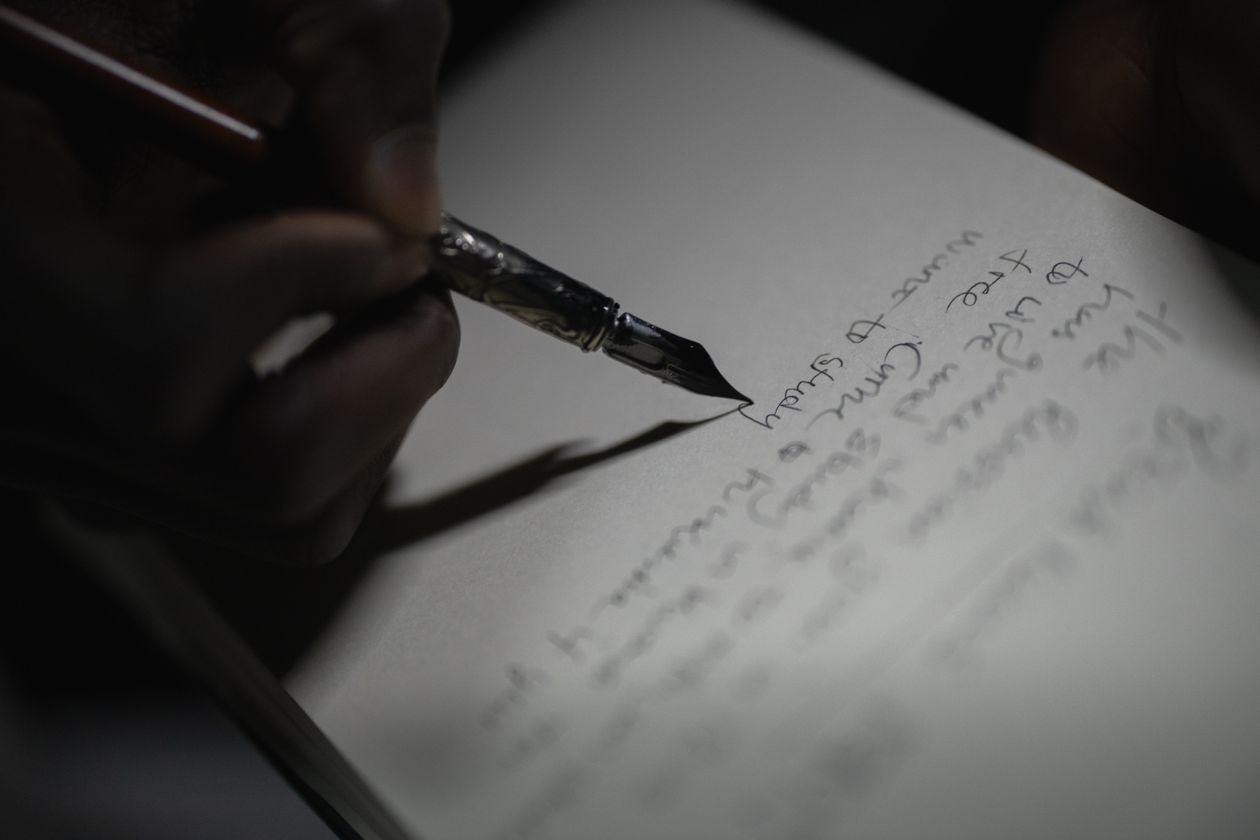
Medium nibs are the right starting point for most first-time fountain pen users — they're forgiving on paper quality, flow without requiring precise hand pressure, and suit a wide range of handwriting sizes. Here's the full breakdown so you can make an informed choice.
| Nib | Best for | Approximate line width |
|---|---|---|
| Extra Fine (EF) | Very small handwriting, technical drawing | ~0.4mm |
| Fine (F) | Standard handwriting, tight notebooks | ~0.5mm |
| Medium (M) ✓ | Most beginners — best starting point | ~0.6mm |
| Broad (B) | Bold, expressive, large handwriting | ~0.8mm |
| Stub | Calligraphy-style line variation, artistic writing | Flat edge |
The Wordsworth & Black Crest Set includes all three nib types in one box — a rare feature under $50. If you'd rather upgrade a pen you already own, the Replacement Nibs Collection covers Crest, Erudite, Majesti and Primori sections separately.
So what should you pick? Start with medium. You can always go finer or broader once you know what your handwriting style needs.
Which Ink Should a Beginner Start With?
The fountain pen sub-segment is projected to reach $1.9 billion by 2030 (GlobeNewsWire, 2025), and ink selection is a big reason why — once you try bottled ink, it becomes a hobby of its own. For beginners, though, the choice is much simpler than it first appears.
Cartridges are pre-filled and disposable — snap in and write. Perfect for your first few months while you're getting used to the pen itself.
Bottled ink with a converter is more economical per milliliter and opens up dozens of color options. Wordsworth & Black bottled inks come in 30ml and 50ml bottles — Racing Green, Royal Blue, Mysterious Black, Poppy, and Corn Red — priced at $14.99–$24.99. A converter is included with most Wordsworth & Black pens.
Start with black or blue. They're the most forgiving on different paper types, show the pen's true performance clearly, and help you assess ink flow without color variables. Once you're comfortable, the color range is waiting.
Are Fountain Pens Good for Journaling?
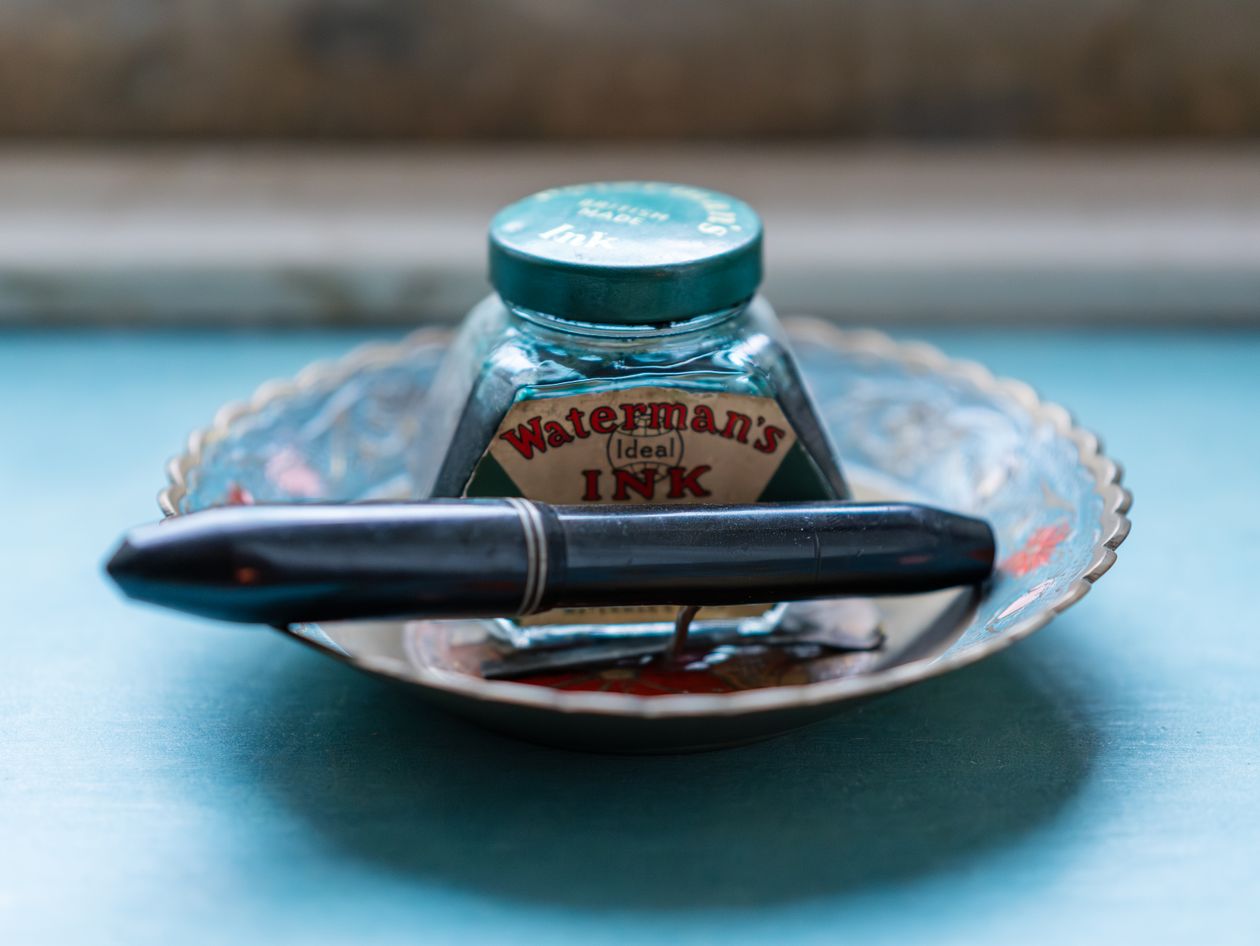
Fountain pens are arguably the best tools for consistent, daily journaling — and the data makes the case clearly. 50 million Americans journal regularly, and those who do report a 42% improvement in task completion and a 35% boost in time management (ZipDo, 2026). Writing by hand engages the brain differently than typing, which is why the habit actually works.
A fountain pen improves that experience. The smooth, consistent ink flow removes the physical friction of writing — no hard pressing, no dry patches mid-sentence. Over a long journaling session, that absence of friction matters more than you'd expect.
Paper pairing note: Wordsworth & Black journals use 120 GSM paper, which is thick enough to prevent ink bleed-through even with wet inks and broad nibs. Standard 80 GSM office notebooks will show shadowing on the reverse side with wetter inks. If you're journaling daily, the paper is as important as the pen.
Watch: Fountain Pen Quick Start Guide
New to fountain pens entirely? This beginner walkthrough covers everything from filling your pen to choosing your first ink.
Frequently Asked Questions
Do fountain pens leak on airplanes?
They can — but it's easily prevented. Keep the pen nib-up during take-off and landing, or leave the ink reservoir less than full before flying. Most modern fountain pens with properly fitted caps are well-sealed under normal travel conditions. The Wordsworth & Black Crest and Erudite both use secure cap mechanisms that prevent leakage during standard flights.
What's the difference between a fountain pen and a rollerball?
A rollerball uses a ball tip with water-based ink — smooth, disposable refills, consistent output. A fountain pen uses a flexible nib that draws ink from a refillable reservoir. Fountain pens offer more writing variation, lower long-term ink cost, and a more tactile, personal writing experience. They also last far longer.
How do I clean a fountain pen?
Flush the pen with room-temperature water every 4–8 weeks, or whenever you switch ink colors. Remove the converter or cartridge, fill the barrel with clean water, and repeat until the water runs clear. Avoid hot water — it can damage rubber seals. Most fountain pens only need cleaning a few times a year with regular daily use.
Is 120 GSM paper necessary for fountain pens?
Not strictly, but it makes a significant difference. Standard 80 GSM paper shows ink shadowing on the reverse side, especially with wetter inks or broad nibs. Wordsworth & Black journals use 120 GSM paper, which prevents bleed-through entirely and makes ink colors appear more vivid and true. For occasional use, standard paper works fine.
Can I use any ink in a fountain pen?
Use inks specifically formulated for fountain pens — they're water-based and free of particles that clog nibs. Avoid India ink, acrylic ink, or calligraphy dip inks in a fountain pen. Wordsworth & Black bottled inks are formulated for use with all Wordsworth & Black fountain pen models and are safe for daily use.
Conclusion
Fountain pens aren't complicated — they just look that way from the outside. The right starter pen makes the experience click immediately.
Our top recommendation remains the Wordsworth & Black Crest Set: three nib sizes, a German iridium nib, bamboo barrel, and a gift-ready wooden case at under $40. It's the most complete beginner package available in 2026. Start with a medium nib, use a cartridge until you're comfortable, then try a bottled ink. That's the entire learning curve.
By month three, you'll understand why the fountain pen market is growing at 6.1% annually — and why 50 million Americans keep a pen and journal on their desk.
Ready to start writing? Shop All Beginner Fountain Pens →
Sources: Zion Market Research (2025) · Grand View Research (2025) · 360iResearch (2025) · GlobeNewsWire (2025) · Global Market Insights (2025) · Accio.com (April 2026) · ZipDo Education Reports (February 2026)